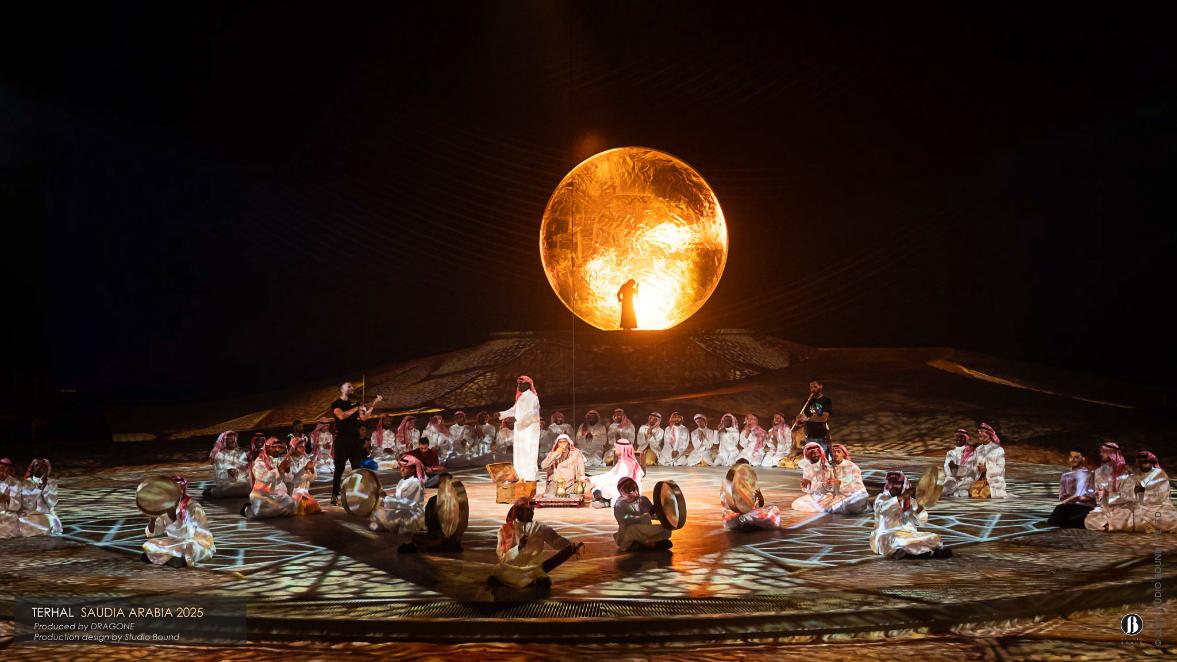
I founded Studio Bound in Singapore in 2015 around one stubborn idea: the people imagining a production and the people who have to build it should never sit in separate rooms.
The name is deliberate. "Bound" — moving toward something with purpose, committed, tied together. That's what the work is.
Why Singapore
New York and London both made sense on paper. I chose Singapore on purpose. It sits in a real position between East and West — geographically, culturally, commercially — and working across both at once is just the normal condition here, not a stretch for one project. The time zones let me collaborate with Asian and Western clients inside the same working day. And the cultural fluency you need to design for very different audiences gets built by living in it, not assembled for a pitch.
How we actually work
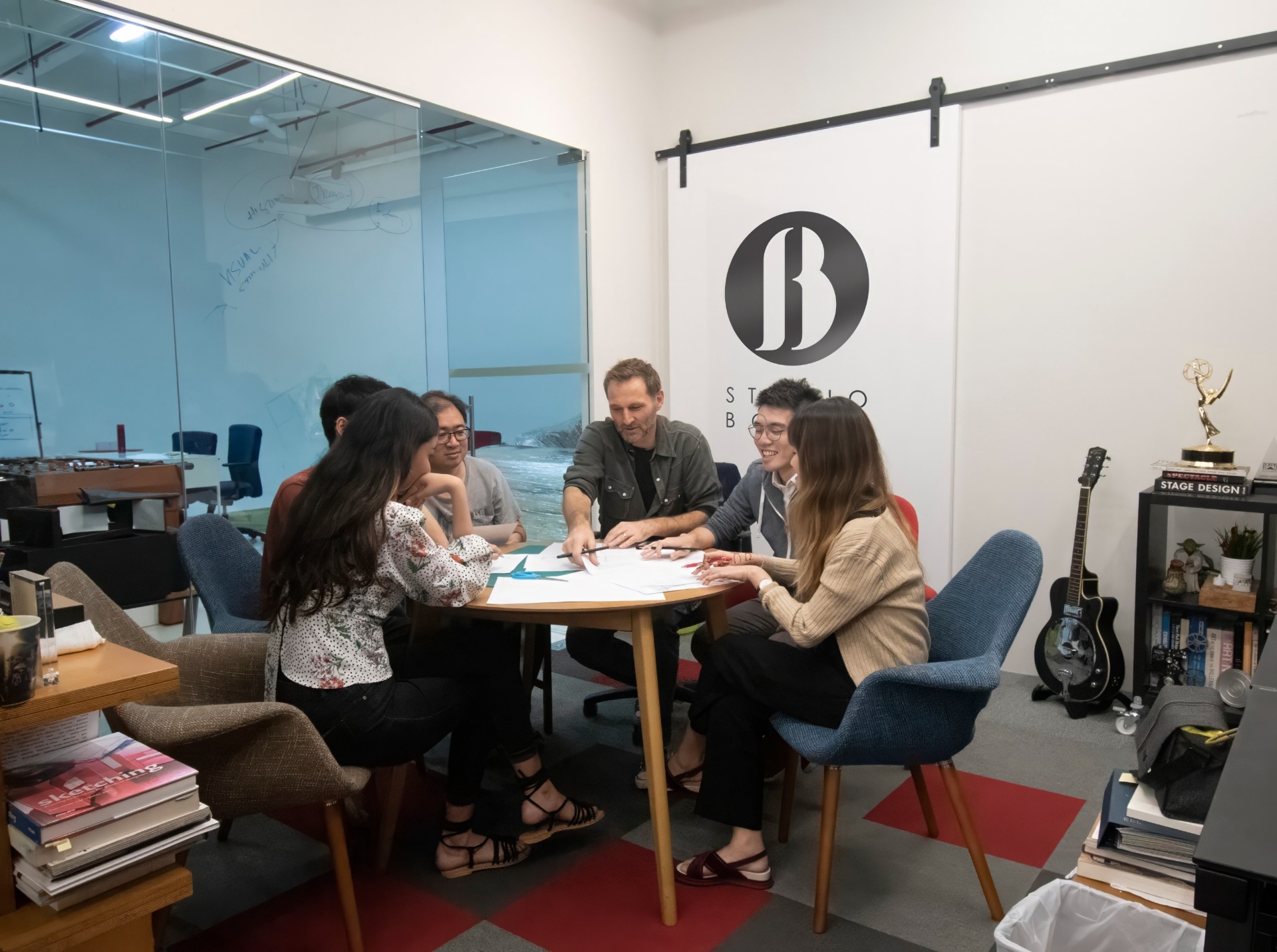
Most design outfits split creative from technical — designers dream, engineers assess, production managers deal with the constraints later. It's tidy on an org chart and a problem in practice. We don't do it that way. Concept artists sit next to technical drafters. Designers and production managers are in the same conversation from day one. When the vision and the engineering keep talking to each other instead of working in sequence, problems show up early — while they're still design questions, not opening-week crises. We take a project from the first idea all the way through the build: masterplan, show direction, set and stage, themed attractions, costume, projection and media. One team the whole way.
Where it's been tested
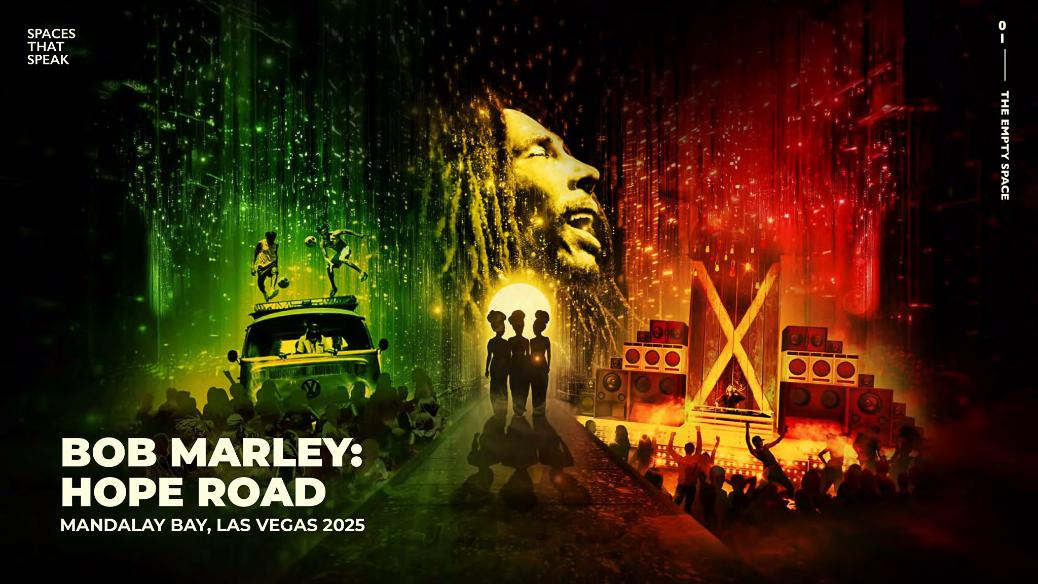
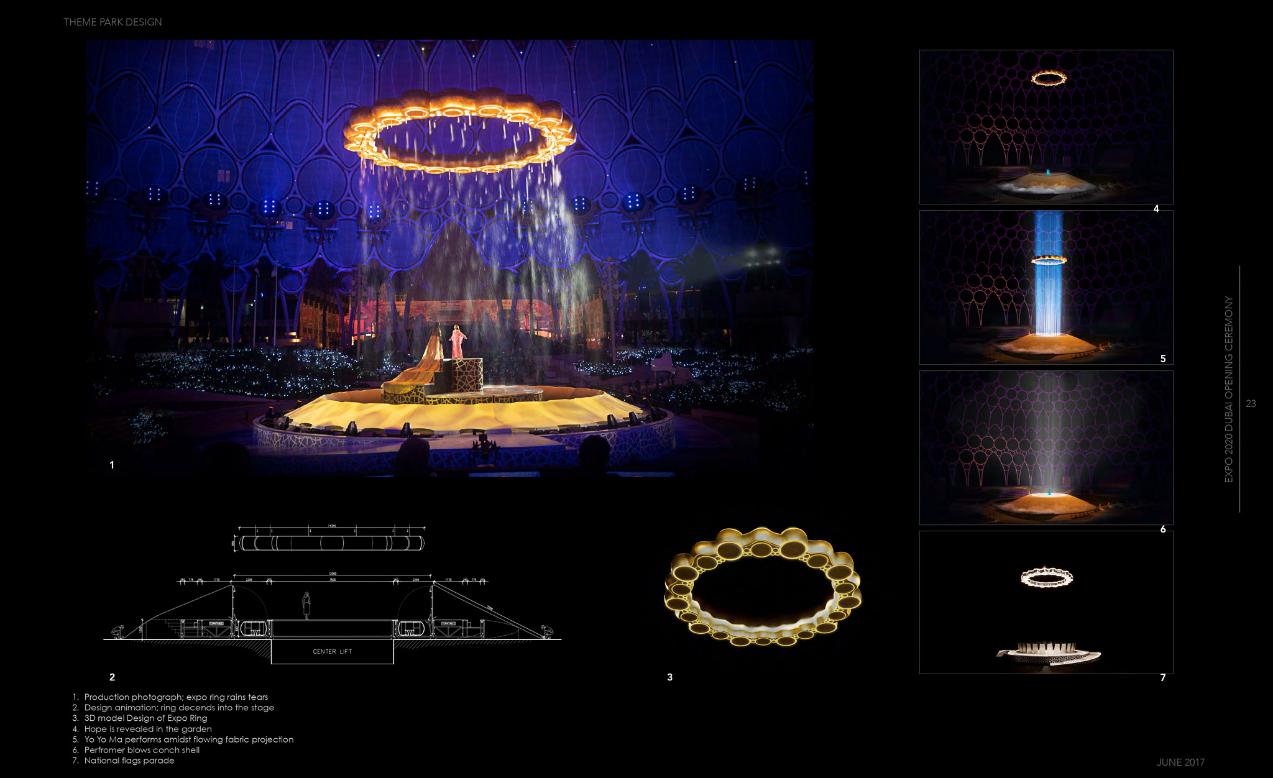
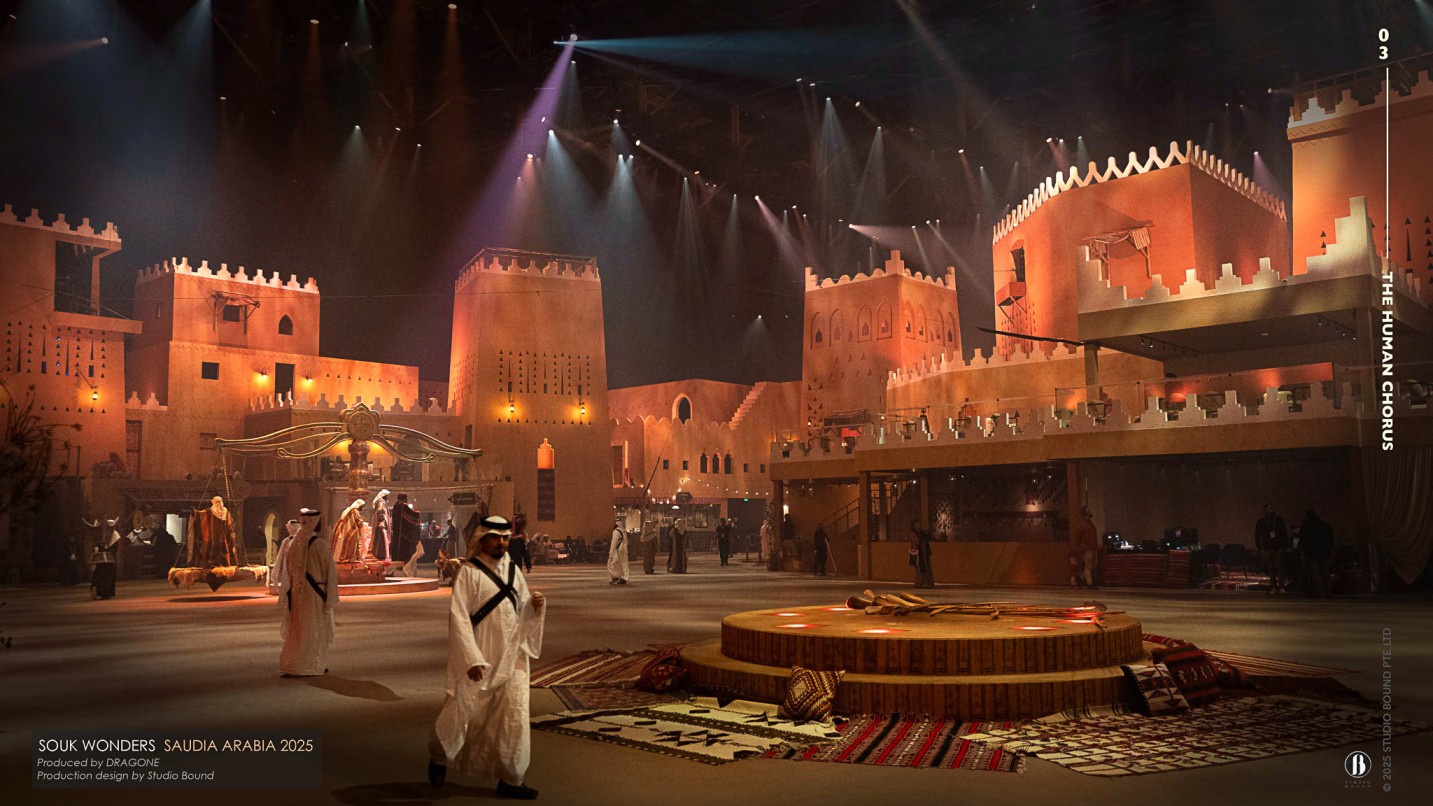
Expo 2020 Dubai is still the most technically complex thing we've done — environmental and scenic design for the opening and closing ceremonies under the 130-metre Al Wasl dome. Before that, the Olympic broadcast environments — CTV's Vancouver 2010 (a BDA Gold) and BBC's Rio 2016 — and the Emmy for NBC News' Education Nation. More recently, Bob Marley Hope Road in Las Vegas, Souk Wonders and Terhal in Diriyah, Singapore's National Day Parade, Universal Studios Singapore, BBC Wimbledon. A lot of the recent work is in the Middle East, through ongoing collaborations with FiveCurrents and Dragone.
What it's for
We stay selective. Not every job. The ones worth doing are the ones that teach us more about how a designed space makes very different people feel something together. Not spectacle for its own sake — the design as the thing that lets a room full of strangers find common ground. That's the whole point of building where vision has to survive physics.