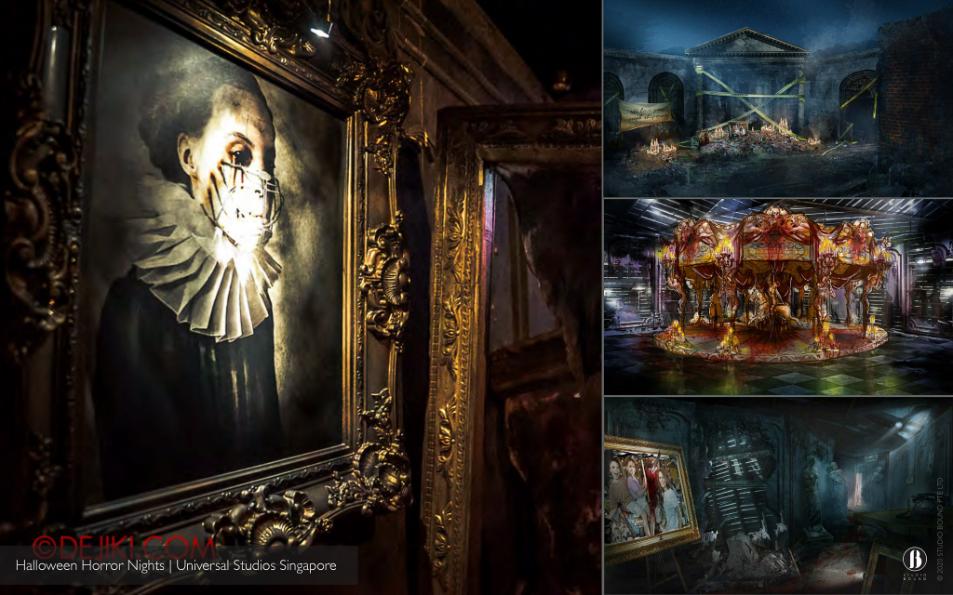
Theme-park scare mazes are one of the harder briefs in the business. You build a complete world a guest walks through in minutes, and it has to be scary, convincing and safe — over and over, all night, every night, for the length of a season. I worked on Halloween Horror Nights at Universal Studios Singapore in 2018 (HHN8) and 2019 (HHN9).
Walking pace
A haunted house isn't watched from a seat. It's experienced from inside, at walking pace, with every surface within arm's reach. That changes the work. Detail has to hold up close. The route has to control what someone sees and when. The atmosphere — light, texture, the smell of things — has to do the emotional work in the seconds before a scare lands.
From paper to a built world
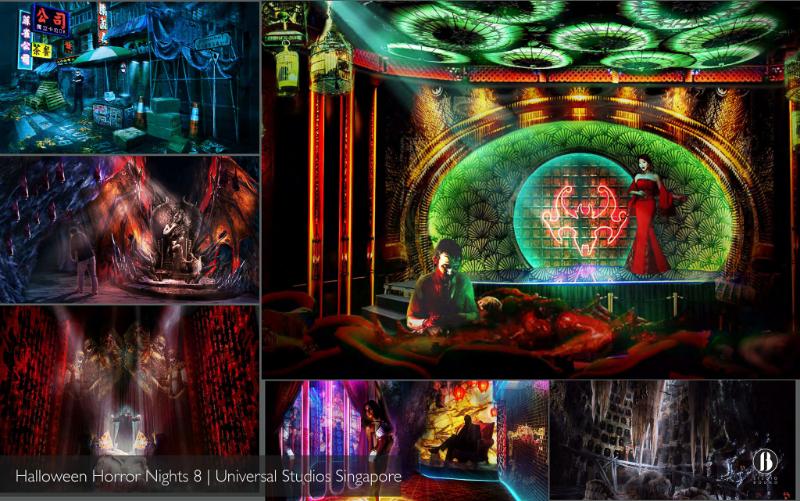
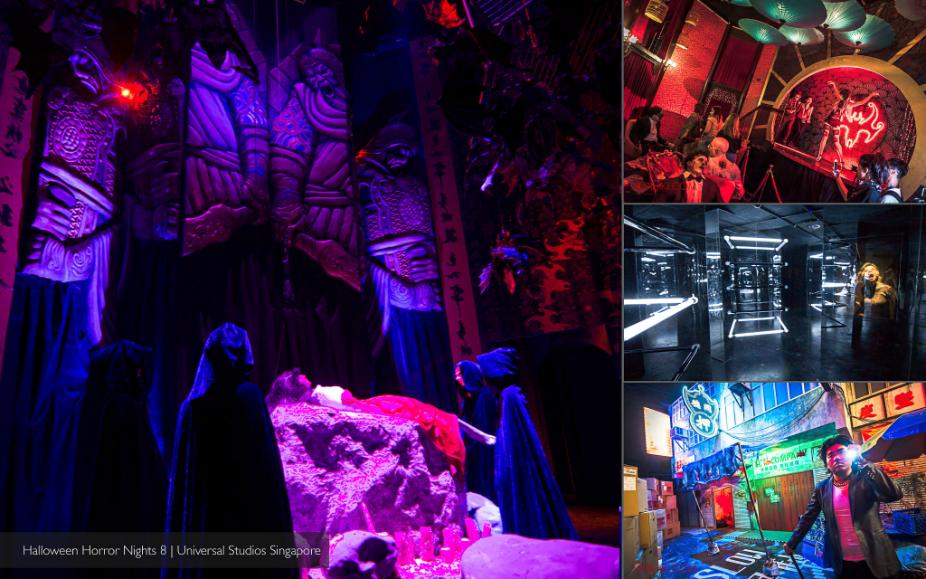
Every maze starts on paper. The renders lock the palette, the silhouettes and the beats of each room before anything is built. By the time construction starts, the build crew, the lighting team and the scare actors are all working from the same world.
Fear is technical
Building dread is mostly engineering. You're moving a crowd safely through a space that's meant to feel unsafe. You're hiding the mechanics of every effect. You're resetting the room for the next group without breaking the illusion. Most of the design is the part nobody sees.
Hell Block 9
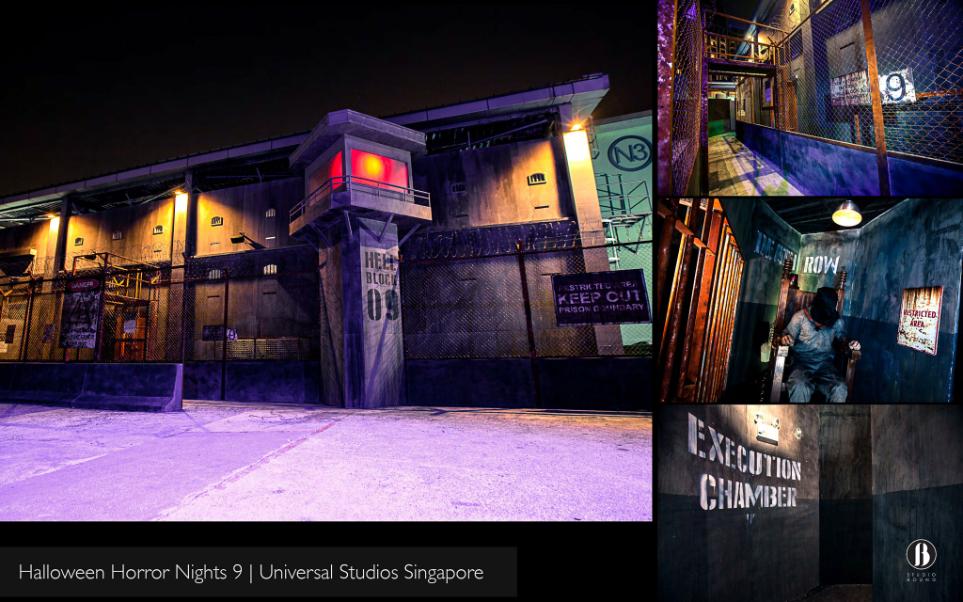
For 2019 the brief jumped from haunted interiors to a full prison block. Façade, guard tower and cell-block corridor built as one continuous walk-through, ending in the execution chamber.
Hard cuts
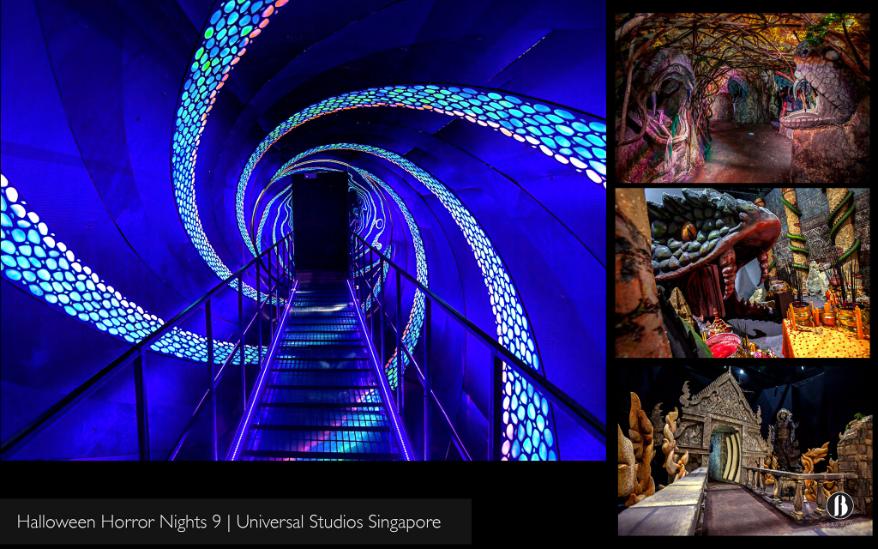
Other HHN9 mazes pulled guests through completely different worlds in the same night — an electric-blue tunnel into a Southeast Asian temple of serpent shrines and carved stone halls. Each transition is a hard cut. New geometry, new palette, new sound, new fear.
Same craft, different scale
HHN is at the opposite end of the spectrum from a stadium ceremony. Smaller, closer, built on dread instead of awe. The underlying skill is the same — build a complete world, and control how an audience moves through it.