For most of theatre history, you built scenery and then you lit it. A lot of my job now is the other way round. You design surfaces for light and video to do the transforming. Across LightSeeker in Singapore, NABA Theatre in Phnom Penh, Splendor in Wuxi — screens and projection have become as structural as timber and steel.
Two ways I work with light
There are basically two approaches and I've worked on both.
The first is a big LED wall used as a backdrop. On LightSeeker at Resorts World Sentosa we had roughly a 10-by-20-metre wall carrying about 54 CG environments behind live performers.
The second is full projection mapping. At NABA Theatre we drew the dome, the walls and the balconies so the entire room could become the scenery — temple to open sky, no physical piece moving.
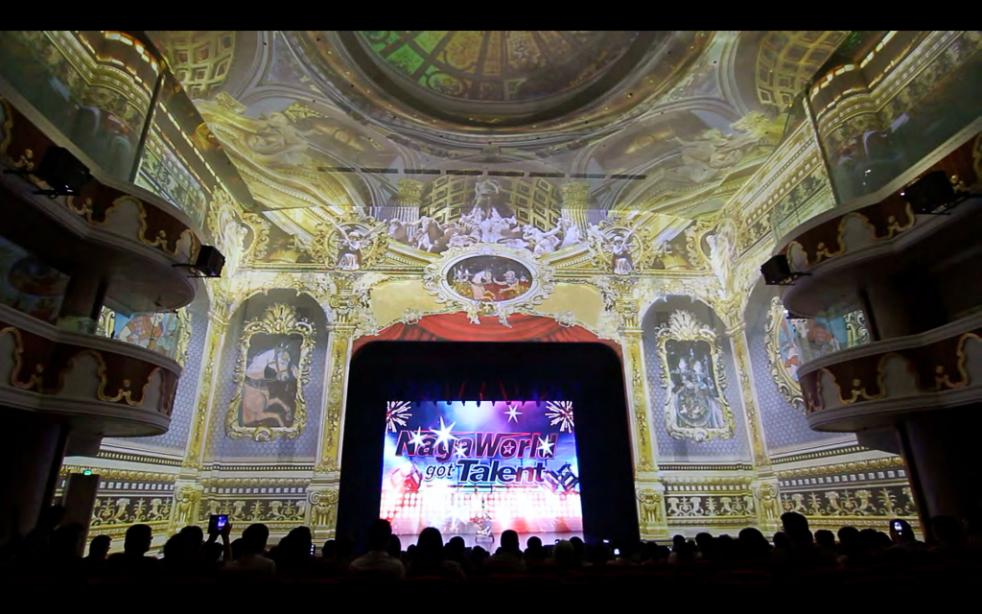
Where the work actually is
The hard part is that the physical set and the content have to be designed together. If they aren't, you end up with a stage standing in front of a television. The geometry has to be exact — projection that lands clean on a curved surface, LED sized and angled so a person isn't swallowed by it. Done right, the audience forgets the tech is there.
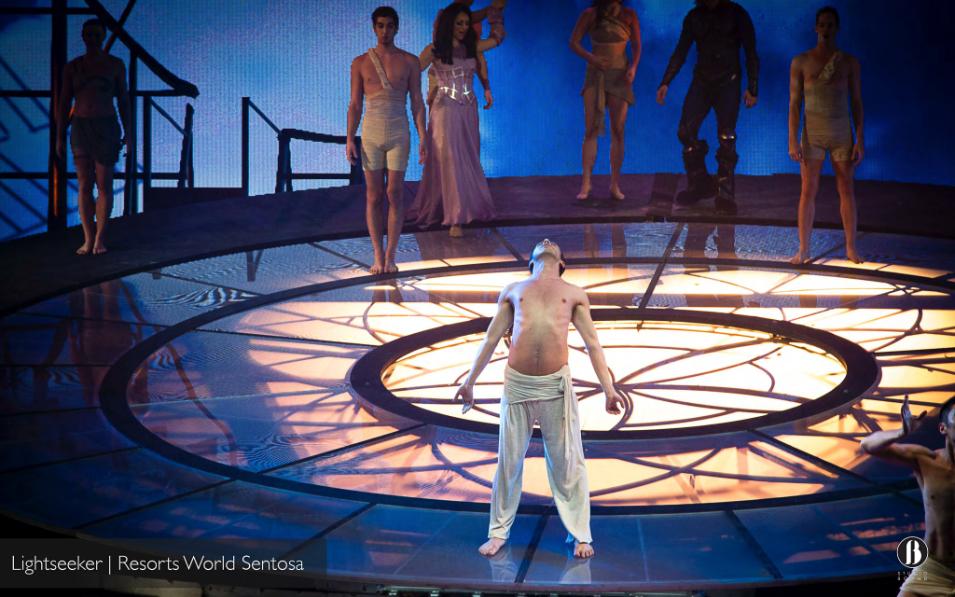
Why I keep getting these briefs
LED and projection keep getting cheaper and brighter. More of live work is going this way. The useful skill is being able to think in both layers at once. I've been doing it since before it was standard, and most of my work across Asia and the Gulf relies on it.