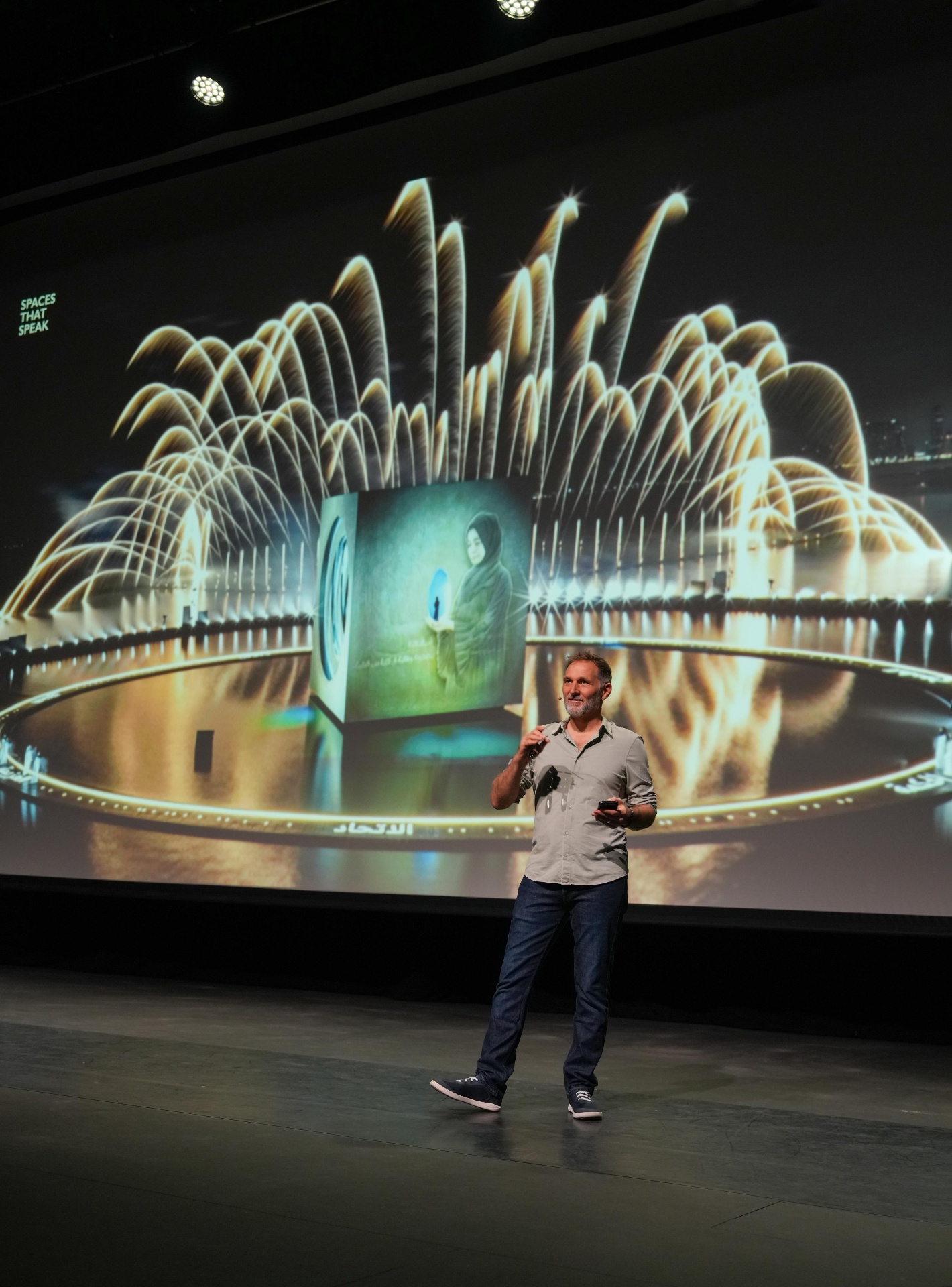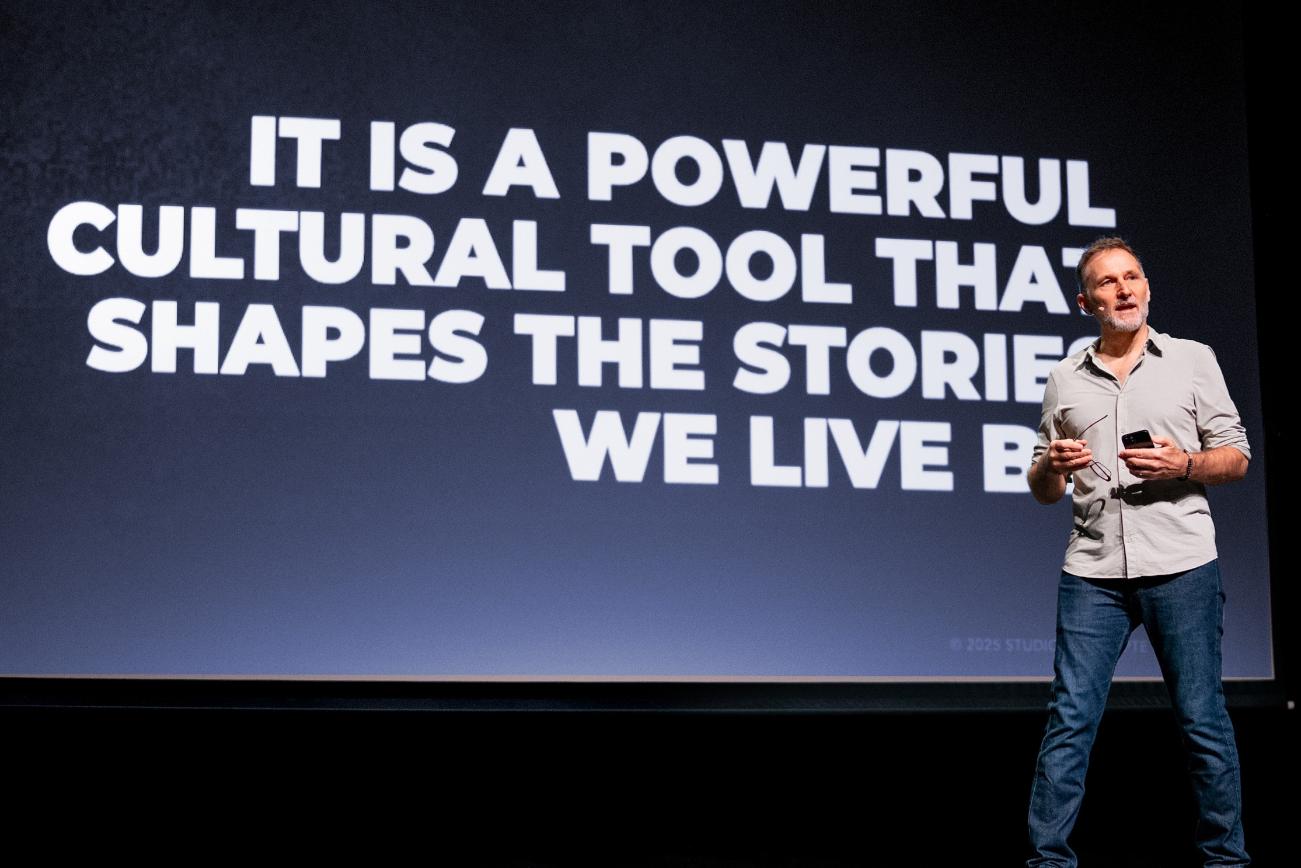
The answer came in the shower.
Not at the desk. Not in a meeting. Not at 2am trying to force it. I'd been stuck on a problem for the Expo 2020 Dubai ceremonies for days — every direction I tried fell short. So I stopped. Went home. And the next morning it was just there: complete, ready to build.
People call that inspiration. The muse. I don't think it's any of that. After twenty years of this — from 200-seat theatres to a 130-metre dome — I've come to see that "spark" as the output of work I'd already done without noticing. It runs in three phases, every time: gather, let it settle, make it real.
Gather more than seems necessary
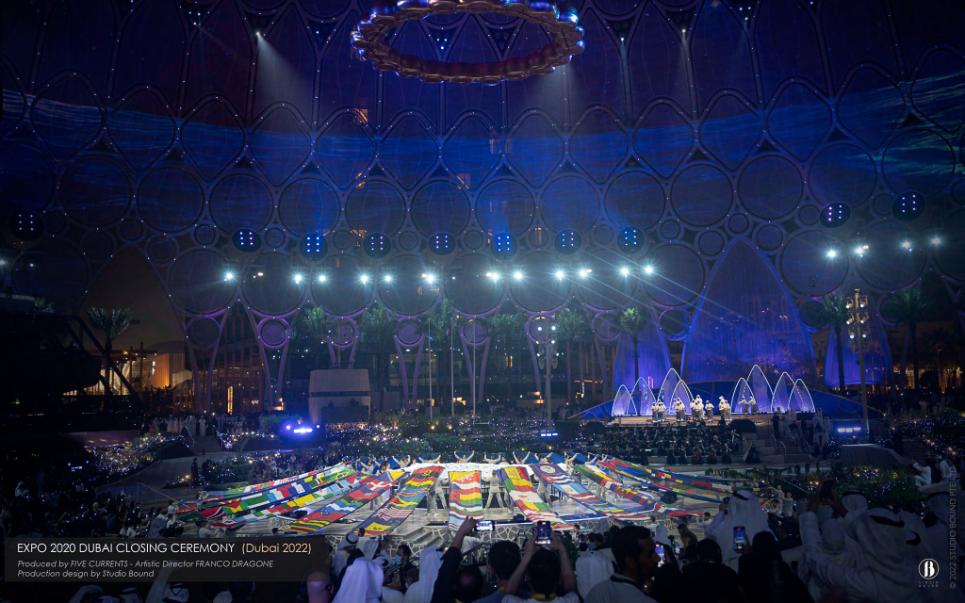
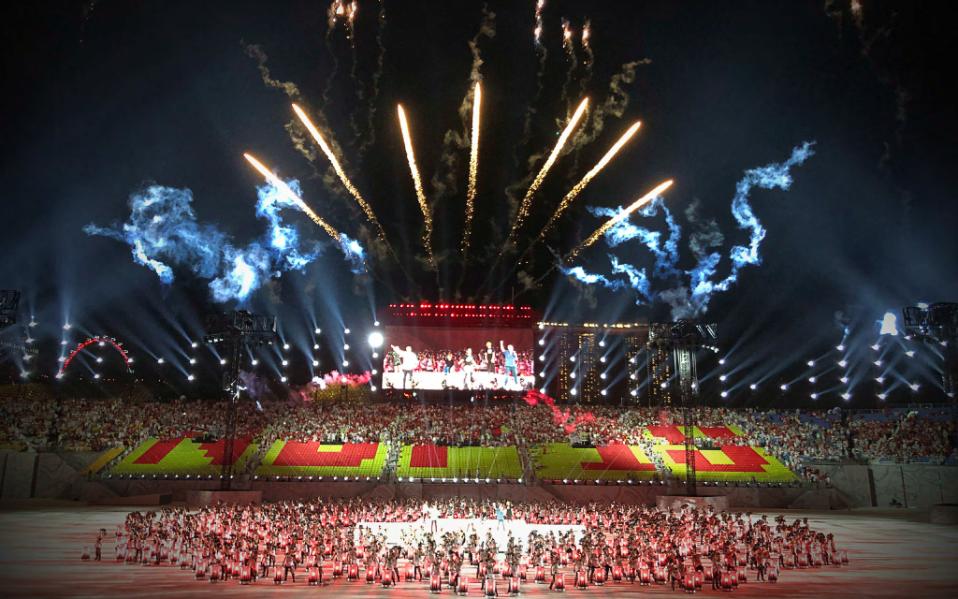
The first phase is just intake. Reading, looking, noticing — some of it obviously relevant to the job, most of it not. That isn't warm-up; it's the actual work. Theatre taught me this early: on a tight budget and a tighter schedule, you design out of whatever you've already absorbed. A designer with narrow references makes narrow work. For Expo I was looking at Islamic geometry, Arabic calligraphy and Emirati architecture — but also crowd psychology and how the eye reads a huge space. For Singapore's National Day Parade it was how different communities read the same symbol, how colour carries different weight across cultures. Almost none of it shows up literally in the final design. All of it shapes the ground the idea grows out of.
Protect the time when you're not working
The second phase is mostly subconscious, and you can't force it. When you push at a problem head-on, your thinking runs in straight lines. When you step away, your brain wanders back through everything you've gathered and makes connections you couldn't have planned. That's the shower. You can't manufacture it — but you can make it more likely: unscheduled time, a walk, letting your attention drift, and sitting with a contradiction instead of rushing to resolve it. Holding two opposite ideas at once is uncomfortable. It's also where the good stuff comes from. Running several shows at once in repertory theatre taught me to trust it — if the intake was solid, the answer arrives. Forcing it under pressure always gives you something thinner.
Then execute, and cut
The third phase is craft. None of the gathering matters if you can't turn the idea into real decisions — scale, colour, texture, how spaces relate. And the hardest discipline here is subtraction. The first version always has too much in it; things that were useful while you were thinking don't belong in the finished work. Good design is removing everything that isn't making it stronger. On something the size of Expo, with a crew of hundreds drawn from dozens of countries, the whole thing held together because of one clear idea: design for emotional connection across cultural difference. That one sentence is what let a lighting designer make the right call at 2am. "Make it impressive" would have given them nothing.
Not magic, craft
This cycle holds no matter the job — a ceremony on a brutal timeline, a fast broadcast build, a magic show, a permanent attraction that has to run for years. Different rhythms, same underlying shape. Once you stop treating creativity as something that either shows up or doesn't, it becomes something you can practise and rely on. Not a gift. A process.